For a San Diego painting contractor, the honest answer is this: an AI receptionist beats a human answering service on cost, speed, and booked estimates for almost every shop — because it answers instantly 24/7, knows your paint services and service area, and books the estimate straight onto your calendar, at a flat price that doesn’t climb with every minute. A human answering service still wins in a few narrow cases — you want a live person for a high-touch commercial account, or you need someone to warm-transfer a call to a specific crew lead. But for the everyday flood of “can you quote my kitchen cabinets in La Jolla?” calls that come in while you’re on a ladder in Chula Vista, the AI answers, qualifies, and books it before your competitor’s phone even rings. This post breaks down what each actually costs in 2026, what each one really does with a paint lead, and the ROI math on the calls you’re missing right now.
In this post
- The real choice: AI receptionist vs answering service vs voicemail
- Why San Diego painters lose jobs on the phone
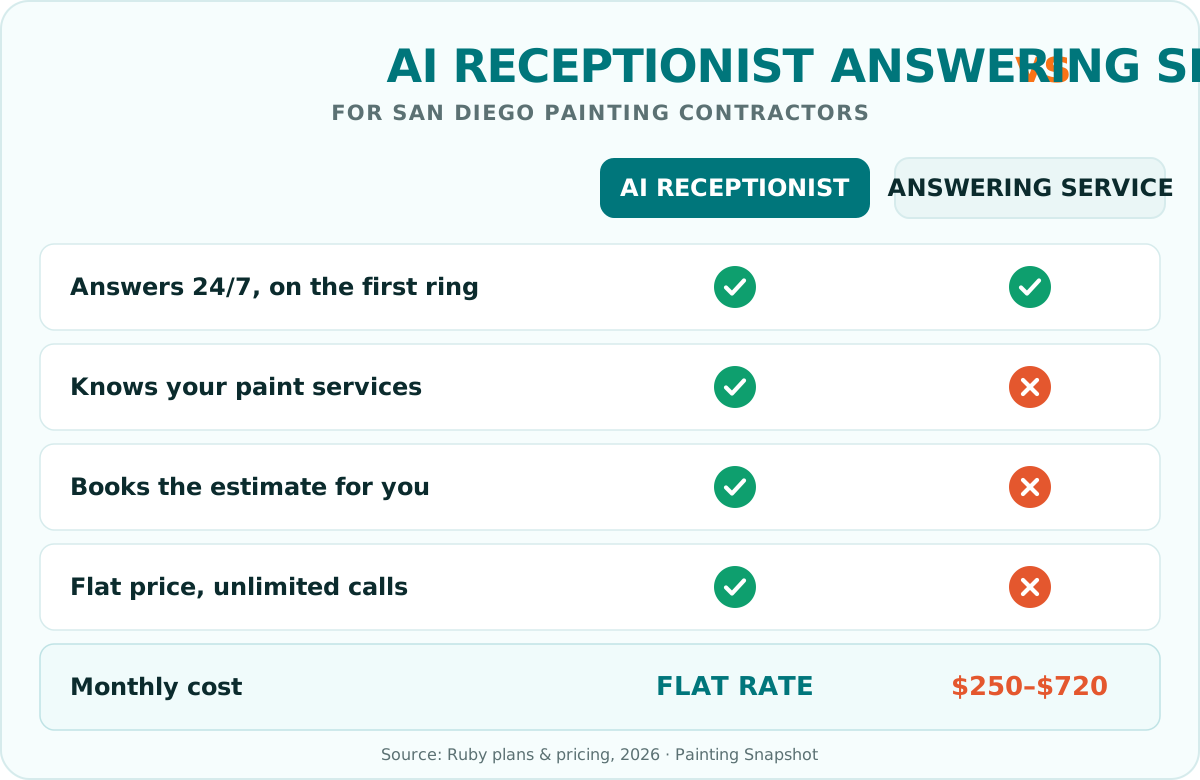
- Head-to-head: AI receptionist vs human answering service
- What each one actually costs in 2026
- The ROI math for a San Diego paint shop
- When a human answering service still wins
- How the AI Caller books a paint estimate
- Frequently asked questions
The real choice: AI receptionist vs answering service vs voicemail
When a homeowner in Encinitas calls your paint shop and you can’t pick up, one of three things happens to that call. Understanding the three is the whole decision.
Voicemail (doing nothing). The call rings out and drops to a recording. This feels free, but it’s the most expensive option on the list: since 27% of home-services calls go unanswered and 85% of those callers never call back (Invoca), voicemail is a quiet leak that dumps roughly a quarter of your inbound demand into a competitor’s pipeline. Homeowners shopping for a painter are calling three or four shops in a row — they hire whoever answers.
A human answering service. A live receptionist at a company like Ruby, PATLive, or AnswerConnect answers in your business name, takes a message, and maybe books a slot. It’s a real human voice, which some callers prefer — but they’re a shared, generic front desk, not a painter. They don’t know the difference between a cabinet respray and an exterior stucco repaint, they usually just take a message rather than qualify and book, and you pay by the minute, so a busy month costs more.
An AI receptionist (AI voice agent). This is a software voice agent that answers every call instantly, 24/7, in a natural conversation. Unlike voicemail, it never misses a ring. Unlike a generic answering service, it’s trained on your services, your service area, and your calendar — so it asks whether the job is interior, exterior, cabinets, or a deck, roughly how big it is, confirms you cover their San Diego neighborhood, and drops a confirmed estimate onto your schedule. And it’s flat-rate: the 41st call of the day costs the same as the first.
For most painting shops, the modern choice isn’t really “AI vs human” — it’s “stop sending a quarter of your leads to voicemail, and pick the tool that books the most estimates per dollar.” That’s usually the AI.
Why San Diego painters lose jobs on the phone
San Diego County is a genuinely large market — about 3.3 million residents across 1.18 million households (U.S. Census) — and the U.S. house-painting industry is a $28.2 billion market with more than 223,000 contractor businesses (IBISWorld, 2025). Translation: there is plenty of repaint work in the county, and plenty of painters competing to answer the phone first.
And the phone is exactly where jobs slip. Two numbers tell the whole story.
First, volume of missed calls. Roughly 27% of inbound calls to home-services businesses go unanswered, and 85% of those callers don’t leave a voicemail or try again (Invoca). You’re on a scaffold, the phone is in the truck, the call rings out — and that homeowner is already dialing the next result.
Second, speed of the first reply. The foundational lead-response research out of MIT and InsideSales found that contacting a web lead within 5 minutes makes you up to 21× more likely to qualify it than waiting just 30 minutes (MIT / InsideSales). Harvard Business Review’s follow-up put the tail end plainly: firms that respond to a lead within an hour are far more likely to convert it, while those that wait 24+ hours are about 60× less likely (HBR, 2011).
Relative likelihood a lead qualifies by first-response time (indexed to 30-minute reply = 1×). Source: MIT / InsideSales Lead Response Management Study.
Put the two together and the problem is obvious: a painter who answers on the first ring, every time, day or night, wins a disproportionate share of the county’s jobs. The question is just how you make that happen — a human on payroll, an answering service, or an AI. (For a deeper look at the after-hours leak specifically, see our guide on why painting shops lose leads after hours and the classic missed-call text-back safety net.)
Head-to-head: AI receptionist vs human answering service
Here’s the practical comparison for a painting shop — not on abstract features, but on what actually decides whether a call becomes a booked estimate.
| What matters for a paint lead | Voicemail | Human answering service | AI receptionist (AI Caller) |
|---|---|---|---|
| Answers 24/7, including nights & weekends | No | Yes | Yes |
| Picks up instantly, every call | No | Usually — shared receptionist pool | Yes, on the first ring |
| Knows painting (interior vs exterior vs cabinets) | No | No — generic script | Yes — trained on your services |
| Confirms your San Diego service area | No | Sometimes | Yes |
| Qualifies the job (scope, size, timeline) | No | Basic message-taking | Yes — asks the right paint questions |
| Books the estimate onto your calendar | No | Limited / message only | Yes — direct to your calendar |
| Cost model | “Free” (but 27% of calls lost) | Per-minute — climbs with volume | Flat rate, unlimited calls |
| Cost of a busy month | — | Higher (overage minutes) | Same as a slow month |
| Follows up by text if they don’t book | No | No | Yes — SMS + nurture |
The pattern is clear. A human answering service is a genuine upgrade over voicemail — a real voice beats a beep. But it’s still a message-taker, not a booker, and it’s priced so that your best months (most calls) cost you the most money. An AI receptionist is built to do the thing that actually grows a paint shop: qualify the job and book the estimate, at a price that doesn’t punish you for being busy.
What each one actually costs in 2026
Let’s put real 2026 numbers on the table.
Doing it with a person on payroll. A dedicated receptionist has a median salary of $37,230/year ($17.90/hour) before you add benefits, which typically pile another ~30% on top (BLS, 2024). And that person works business hours — nights, weekends, and lunch breaks still go unanswered. For most small paint shops, a full-time front desk is overkill for the call volume.
A human answering service. You pay by the minute. Ruby, one of the most established virtual-receptionist services, prices its call plans at roughly $250/month for 50 minutes, $395/month for 100 minutes, and $720/month for 200 minutes, with overage minutes billed on top (Ruby). That’s an effective $3.50–$5.00 per minute. A handful of two-minute calls a day and you’re into the higher tiers fast — and remember, they’re mostly taking messages, not booking jobs.
Human answering service monthly cost by plan, in US dollars, before overage minutes. Source: Ruby plans & pricing, 2026.
An AI receptionist. The economics flip. Instead of paying per minute, you pay a flat rate and the AI handles unlimited calls — the tech is finally good enough to trust with a real customer conversation. Gartner projects that agentic AI will autonomously resolve 80% of common customer-service issues by 2029, cutting operational costs by about 30% (Gartner, 2025), and 88% of organizations already use AI in at least one business function (McKinsey, 2025). In the Painting Snapshot, the AI Caller comes pre-built inside the one-time $997 snapshot — no per-minute meter running while a homeowner describes their whole house.
The takeaway isn’t that the answering service is a rip-off — it’s that its pricing model works against a growing paint shop, while the AI’s flat rate works with it.
The ROI math for a San Diego paint shop
Costs only matter next to what they return. Here’s illustrative math for a typical San Diego painting contractor (your real numbers will vary — this is a framework, not a promise).
Say your marketing brings in 60 inbound calls a month. If 27% go unanswered, that’s ~16 missed calls, and with 85% never calling back, roughly 14 lost opportunities every month. San Diego repaint jobs routinely run into the low thousands of dollars, so even at a conservative 25% close rate, recovering those 14 calls is 3–4 booked estimates a month you’re currently handing to competitors. (Want to pressure-test your own numbers? Start with what a painting lead actually costs.)
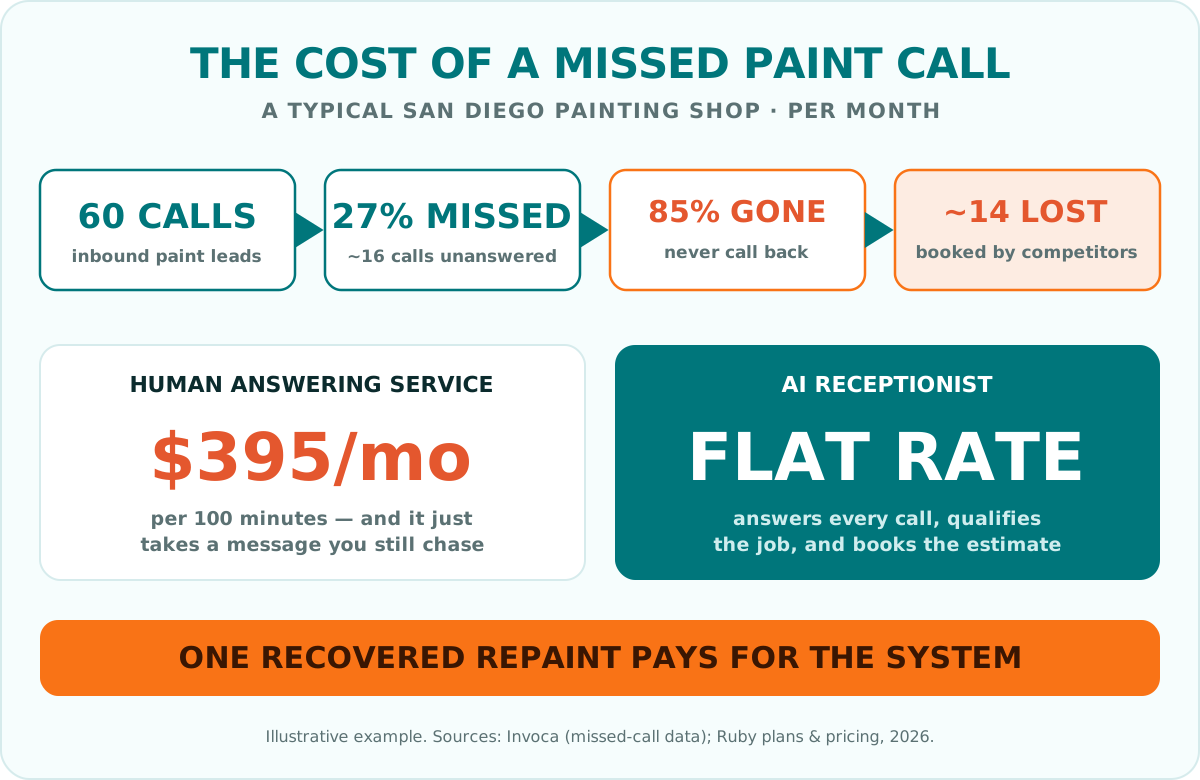
Now the cost side. A human answering service catching that overflow at, say, the 100-minute tier runs $395/month = $4,740/year, and mostly takes messages you still have to chase. A flat-rate AI receptionist inside the snapshot answers all of it, books directly, and texts the ones who don’t. If recovering even one mid-size repaint pays for the entire system, the ROI question basically answers itself — and every additional booked estimate after that is margin.
That’s the real difference: an answering service is a cost you manage; an AI receptionist that qualifies and books is a lead-recovery engine you own.
When a human answering service still wins
This is a comparison, not a sales pitch, so here’s the fair side. A live answering service is the better call when:
- You run high-touch commercial or HOA accounts where a property manager expects a human to warm-transfer them to a specific crew lead or project manager.
- Your calls are complex and non-standard — restoration disputes, insurance work, or sensitive conversations where a scripted qualification flow would feel wrong.
- You strongly prefer a human voice as a brand choice and your call volume is low enough that per-minute pricing stays cheap.
For those cases, a human service earns its cost. But note that most painting shops don’t live there — the bulk of a paint shop’s inbound calls are straightforward residential estimate requests, which is exactly the lane where an AI receptionist qualifies and books faster and cheaper. Many shops end up running both: the AI handles the after-hours and overflow flood (where the 27% leak lives), and a human covers the rare white-glove account.
How the AI Caller books a paint estimate
Here’s what actually happens when the AI Caller picks up a San Diego homeowner’s call inside the Painting Snapshot:
- Answers on the first ring, 24/7. No hold music, no “we’re closed,” no voicemail — a natural-sounding voice agent greets them in your business name.
- Qualifies the job. It asks what they want painted (interior, exterior, cabinets, deck), roughly how big, and when they’re hoping to start — the same questions a good estimator would.
- Confirms the service area. It checks that the address is inside your San Diego coverage, so you’re not booking a drive across the county for a job you don’t want.
- Books the estimate. It offers open slots and drops a confirmed appointment straight onto your calendar, then fires an SMS confirmation.
- Follows up if they don’t book. If the caller isn’t ready, it hands off to an automated text sequence so the lead doesn’t go cold — the same follow-up muscle behind reducing estimate no-shows.
It’s the front desk a paint shop wishes it could afford, working every hour of every day. For the deeper how-and-why, see our full guide to the AI receptionist for painting contractors.
Frequently asked questions
AI receptionist vs answering service — painter FAQs
Is an AI receptionist cheaper than a human answering service for a painting business?
For most painting shops, yes. Human answering services like Ruby bill by the minute — roughly $250–$720/month for 50–200 minutes (Ruby) — so busy months cost more. An AI receptionist is flat-rate and answers unlimited calls; in the Painting Snapshot the AI Caller is built into the one-time price instead of a per-minute meter.
Will a homeowner in San Diego know they're talking to an AI?
Modern voice agents sound natural and conversational, and they're transparent about being an automated assistant. What callers actually care about is that someone picked up instantly and booked their estimate — which beats voicemail or a message they have to wait on. Gartner projects AI will autonomously resolve 80% of common service interactions by 2029 (Gartner, 2025).
What happens to calls I miss right now?
They mostly disappear. About 27% of home-services calls go unanswered and 85% of those callers never call back (Invoca) — they dial the next painter. That's the leak both an answering service and an AI receptionist are designed to plug; the AI just also books the estimate instead of only taking a message.
Can the AI receptionist actually book onto my calendar, not just take a message?
Yes — that's the core difference. A human answering service typically takes a message you still have to chase. The AI Caller qualifies the job and drops a confirmed estimate onto your calendar, then sends an SMS confirmation and follows up by text if the caller isn't ready to book.
Should a San Diego painter use both an AI receptionist and a human service?
Some do. The AI handles the after-hours and overflow flood — where most missed calls happen — while a human service covers rare high-touch commercial or HOA accounts that need a live warm transfer. For the everyday residential estimate call, the AI answers faster and books more, at a flat cost.
About the author
Rafael Montoya is the founder and GHL automation lead behind Painting Snapshot. He spent eleven years running an exterior-and-cabinet repaint crew across the Phoenix valley before teaching himself GoHighLevel to answer every estimate request the moment it landed. He builds done-for-you painting snapshots and writes about the systems that let a shop book jobs without the owner glued to a phone.